
 Varazdat S.
 Janis Tirtey

The Short Answer
A profile creator is a process, not one tool
A Tinder profile creator is not a single product. It is the process of choosing your photos, writing a short bio and, on apps that have them, answering prompts, plus any tool you use along the way. Search results for the term mostly show bio and profile generators, which draft text from a few details you give them.
This guide covers that process for Tinder, Hinge and Bumble, and where AI helps honestly: drafting and editing your own bio, and choosing between your own real photos. It also covers where it does not. Tinder and Bumble both state in their guidelines that the profile must represent you, and Tinder's Face Check compares a video selfie with the profile photos.
How Each App Builds a Profile
Same base material, different emphasis
| App | What the profile is built from | Where to put the effort |
|---|---|---|
| Tinder | Photos and a short bio | Photo one: a clear solo shot of your face |
| Hinge | Photos plus written prompts you answer | Prompt answers with a specific story, not a trait |
| Bumble | Photos, a short bio and optional extras | At least one solo photo that shows your full face |
Limits for bio length, photo count and prompts change by app and by version, so check the editor in the app instead of trusting a number from a blog. Write one strong base profile first (photos, a short bio, three or four true stories), then trim it to fit each app.
Choosing and Ordering Photos
Photos do most of the work, so start here
- Lead with a clear solo photo. Your face visible, good daylight, no sunglasses or heavy filter. This is the photo most people judge first.
- Add a full-body or activity photo. It shows what you look like and what you do, which gives a conversation something to start from.
- Add one social photo. A photo with friends works only if it is easy to tell which one is you.
- Use recent photos. Someone who meets you should recognise you from the profile.
- Ask a friend to choose. Other people pick the strongest photo more reliably than you do.
Bumble's guidelines require at least one photo that shows only you and clearly shows your full face, and they do not allow photos that are heavily distorted or carry exaggerated or unnatural digital effects. Cropping and fixing exposure is fine; reshaping your face is not.
Three Bio Formulas
Specific beats clever
- Detail plus invitation. One concrete detail, then something to ask about. Example: "Weekend baker, slow hiker. Ask me about the sourdough starter I named after a sitcom character."
- Two truths and a hook. Two plain facts and one open line. Example: "Nurse, dog person, terrible at parallel parking. Tell me your best bad idea for a Sunday."
- A plan, not a list. Describe a first date you would enjoy. Example: "Looking for someone to split a dessert menu with and argue about the best one."
Keep it to what is true and what you would say out loud. A list such as "I like travel, food and music" tells the reader nothing, because almost everyone could write it. On Hinge, use the same formulas as the start of a prompt answer.
Where AI Helps Honestly
AI for your words, not for your face
Text tools are the legitimate use. A bio generator or a general AI assistant can:
- draft three versions of a bio from facts you give it
- shorten a long bio to fit the limit in the app
- fix grammar and vary the tone from dry to playful
- suggest follow-up questions for your prompt answers
The honest way to use it is to give it real facts, edit the result until it sounds like you, and check that every line is true. A generated bio that nobody edited tends to read like everyone else's, which defeats the point. For photos, stay with light fixes in your phone's editor, such as crop, brightness and straightening.
Where the Apps Draw the Line
What the guidelines and Face Check say
Tinder's community guidelines tell members not to create a fake account or pretend to be someone they are not, even for fun. The version we read does not mention AI-generated images specifically, so the rule that matters is the general one. Bumble's guidelines expect members to represent themselves accurately, prohibit creating a persona that is not you (catfishing), and prohibit lying about name, gender, age or location.
Tinder has also been rolling out Face Check, which asks new users for a short video selfie and compares it with their profile pictures. TechCrunch reported the US expansion in October 2025, and Global Dating Insights reported on 26 March 2026 that it had been extended to the UK for new users. Coverage lists the countries and states where it applies, which may have changed since.
The practical conclusion: do not use an AI-generated person, or someone else's photos, as your profile. Besides breaking the rules, it ends with a real person meeting someone who does not look like the photos. If you publish AI-made content elsewhere, see AI content disclosure rules.
Where RYLA Fits and Where It Does Not
AI characters for creator content, not for dating profiles
RYLA is not a dating profile tool, and we do not recommend using it for one. It builds fictional AI characters for creator content, such as an AI influencer account where the character is labeled as AI. That is a different use from a dating profile, where the person has to be you.
If you do build a character for content, this is the actual sequence in the RYLA builder:
- Pick a niche, then gender and style.
- Set the look: ethnicity, age, skin, eyes, face shape, and hair.
- Choose outfit and scene, then personality and a name, then a voice.
- Generate base images and pick the one that becomes your character.
- RYLA generates a reference sheet of that face.
- Finalize, then create new photos in Studio, motion with image-to-video, and talking clips in Avatar Video.
Here is one RYLA character from the showcase on this site, in two different scenes:
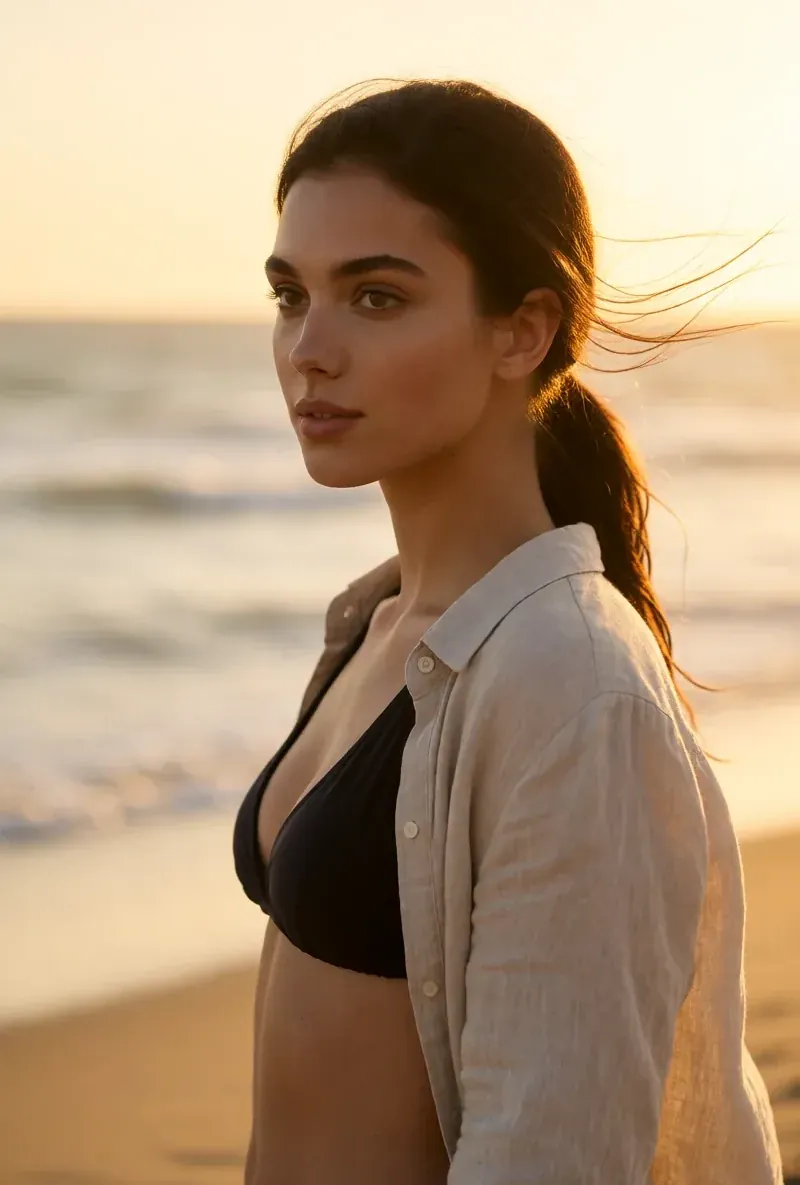
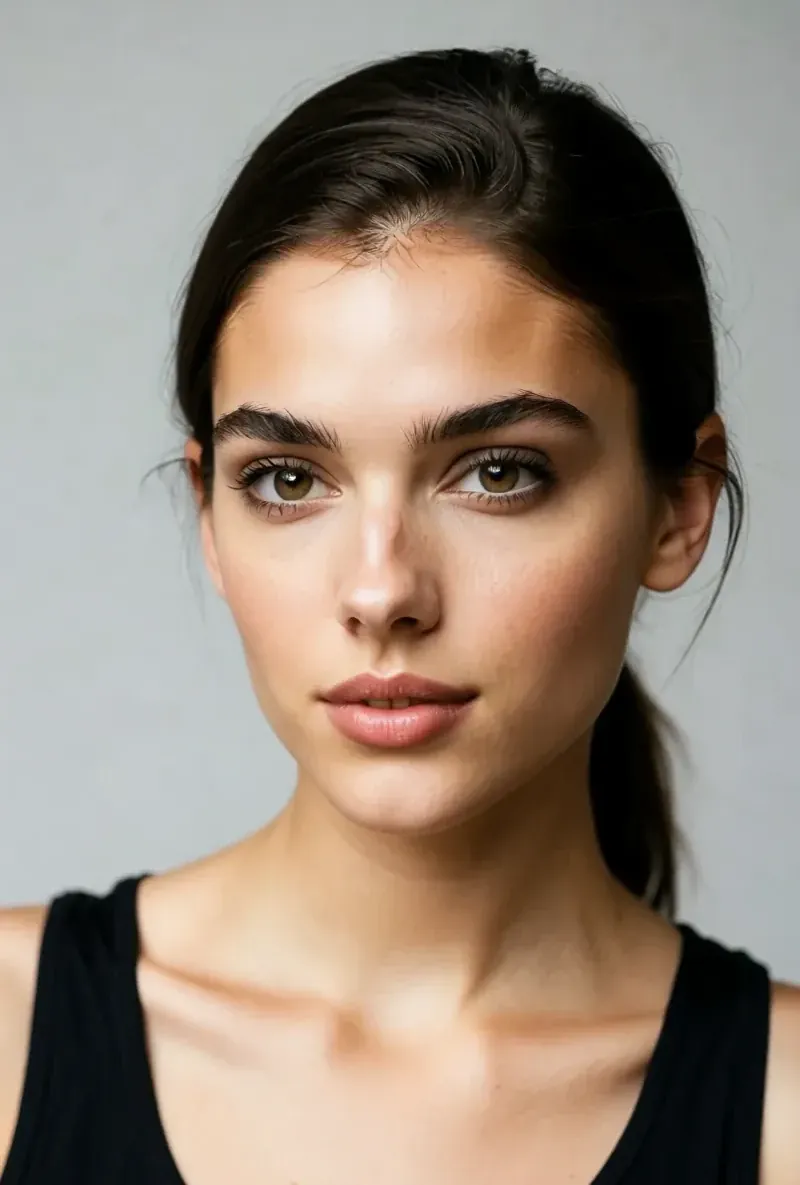
Read how to create an AI influencer for the full process, how to write an AI influencer bio for the creator-account version of a bio, and see the pricing page for current plans.
Building an AI Character for Content?
Design a fictional character with a locked face and generate its photos and videos in one workspace. Free to start.
Start Free TrialCommon Mistakes
What weakens a profile or gets it removed
Using photos that are not yours, or an AI persona. It breaks the rules of the apps and is unfair to the person on the other side.
Over-editing. Heavy filters and reshaped features can fail Bumble's photo rules and disappoint on a first meeting.
Listing traits instead of showing one. "Funny, adventurous, loyal" says nothing. One specific story says more.
Pasting a generated bio unchanged. Edit it until you would say it out loud.
Leading with a group photo. Readers should not have to guess which one is you.
Misstating basic facts. Bumble's guidelines prohibit lying about name, gender, age or location.
Sources
All sources retrieved 2026-11-05
- Community Guidelines, Tinder (retrieved 5 November 2026)
- Bumble Guidelines, Bumble (retrieved 5 November 2026)
- Tinder will require new users in the US to verify their identity with a selfie, TechCrunch (22 October 2025)
- Tinder rolls out mandatory Face Check for new UK users, Global Dating Insights (26 March 2026)