

The Short Answer
It depends on which kind of AI content creator you mean
If you mean the job title, the answer is a salary: ZipRecruiter estimated the average AI content creator in the United States earned $116,615 a year, or $56.06 an hour, as of September 2026. If you mean an independent creator who publishes AI-generated photos and videos on Instagram, TikTok or YouTube, there is no salary at all. Income comes from sponsored posts, platform payouts, subscriptions and direct sales, and it scales with audience size and deal flow.
For independent creators, 2026 rate cards put a single sponsored Instagram feed post anywhere from $50 for a nano account to $5,000 for a mid-tier account. Monthly income is the number of paid deals actually closed, multiplied by those rates, plus anything the platforms and the audience pay directly. The sections below give the sourced numbers for both paths and show where most estimates go wrong.
Two Kinds of AI Content Creator
An employee and a business owner earn in different ways
Search results for this question mix two groups, which is why the numbers you find look contradictory.
- The salaried AI content creator. A company hires someone to produce marketing copy, images or video with AI tools. Pay is a wage or salary set by the employer, and job boards publish averages for it.
- The independent AI creator. A person runs their own account, often built around an AI-generated character, and earns from brands, platforms and followers. Nobody sets a wage; income depends on audience, engagement and how actively the account sells.
Neither number tells you much about the other. A job board average says nothing about what a 20K-follower AI account earns, and a top AI influencer's reported income says nothing about a typical staff salary.
What the Job Title Pays
Job board averages for the US, September 2026
ZipRecruiter builds its salary estimates from employer job postings and third-party data. For the title "AI Content Creator" it reported the following as of September 2026:
| Measure | AI Content Creator (US) |
|---|---|
| Average annual pay | $116,615 |
| Average hourly pay | $56.06 |
| Lowest annual figure seen | $29,500 |
| Highest annual figure seen | $129,000 |
| 25th to 75th percentile | $123,000 to $128,000 |
The narrow middle band reflects a title that is still new and posted by a limited set of employers, so treat it as a snapshot of current listings rather than a stable market rate. On the same page, ZipRecruiter lists the related title "Visual Content Creator" at an average of $54,759 a year, which shows how much the label on a job posting moves the number.
What Independent Creators Charge
Sponsored post rates by follower tier
For independent creators, brand deals are the main income line. A rate guide updated on August 13, 2026 lists these ranges by tier:
| Tier | Instagram feed post | Instagram Reel | TikTok video |
|---|---|---|---|
| Nano (1K to 10K followers) | $50 to $200 | $100 to $500 | $50 to $300 |
| Micro (10K to 100K followers) | $200 to $1,500 | $500 to $3,000 | $300 to $2,500 |
| Mid-tier (100K to 500K followers) | $1,500 to $5,000 | $3,000 to $10,000 | $2,500 to $10,000 |
The same guide stresses that follower count sets the baseline, while engagement, platform, niche and format move the final price. An AI-generated account is priced by brands on the same reach and engagement logic as a human one, so these tiers are a reasonable reference for an AI creator too.
To turn a rate into a monthly figure, multiply by deals closed, not posts published. A micro account that closes two feed post deals a month at $500 earns $1,000 from sponsorships that month; the same account with no deals earns nothing from them, however often it posts.
How Many Creators Earn a Living
Salary-level income is the exception
Goldman Sachs Research estimated in 2023 that there were about 50 million creators worldwide and that only about 4% of them were professionals earning more than $100,000 a year. The same analysis found that brand deals made up about 70% of creator revenue, with platform ad revenue sharing and direct payments from followers making up the rest.
These figures cover all creators, not only those who use AI, and they are from 2023. They are still the clearest available reminder that the independent path does not average out to a salary. The ZipRecruiter figure above describes people on a payroll; the Goldman Sachs figure describes the far larger group who are not.
Platform Payouts
A separate line with its own eligibility rules
Platform payouts are paid by the platform, not by brands, and they come with thresholds. On YouTube, the Partner Program requires 1,000 subscribers plus either 4,000 public watch hours on long-form videos in the past 12 months or 10 million public Shorts views in the past 90 days, along with being 18 or older and living in an eligible country.
For Shorts, YouTube states that monetizing creators keep 45% of their allocated revenue from the Shorts creator pool. That is a share of a pool, not a fixed rate per view, so it cannot be turned into a dependable monthly number in advance. Instagram and TikTok run their own creator programs with separate rules by region; we do not quote a per-view rate for them because it changes by program.
For most independent AI creators, platform payouts are a smaller line than brand deals and direct sales. See AI influencer monetization for how the other income streams work.
A Real AI Account With Public Numbers
Aitana López, as reported in December 2024
Public income figures for AI creators are rare, and most that circulate online cannot be traced to a source. One that can: Euronews reported in December 2024 that Aitana López, an AI-generated model run by a Spanish agency, had gained more than 343,000 Instagram followers in a year and a half. According to her creators, she can earn up to 10,000 euros a month, but the average is usually around 3,000 euros, and she earns just over 1,000 euros per advert.
These are figures reported by the creators, not an audit, and the account is well above the size of a typical new AI creator. Still, they sit inside the rate card ranges above, and they show the gap between a headline maximum and an ordinary month. For more on the income side see AI influencer income, and for a creator near that audience size see how much influencers make with 200K followers.
What the Work Looks Like on RYLA
Building the character once, then producing content
For an independent AI creator, most of the cost is time spent producing content that looks like the same person every time. On RYLA, this is the actual sequence in the builder:
- Pick a niche, then gender and style.
- Set the look: ethnicity, age, skin, eyes, face shape, and hair.
- Choose outfit and scene, then personality and a name, then a voice.
- Generate base images and pick the one that becomes your character.
- RYLA generates a reference sheet of that face.
- Finalize, then create new photos in Studio, motion with image-to-video, talking clips in Avatar Video, and swaps in Video Swap.
Here is one RYLA character from the showcase on this site, generated in two different scenes:

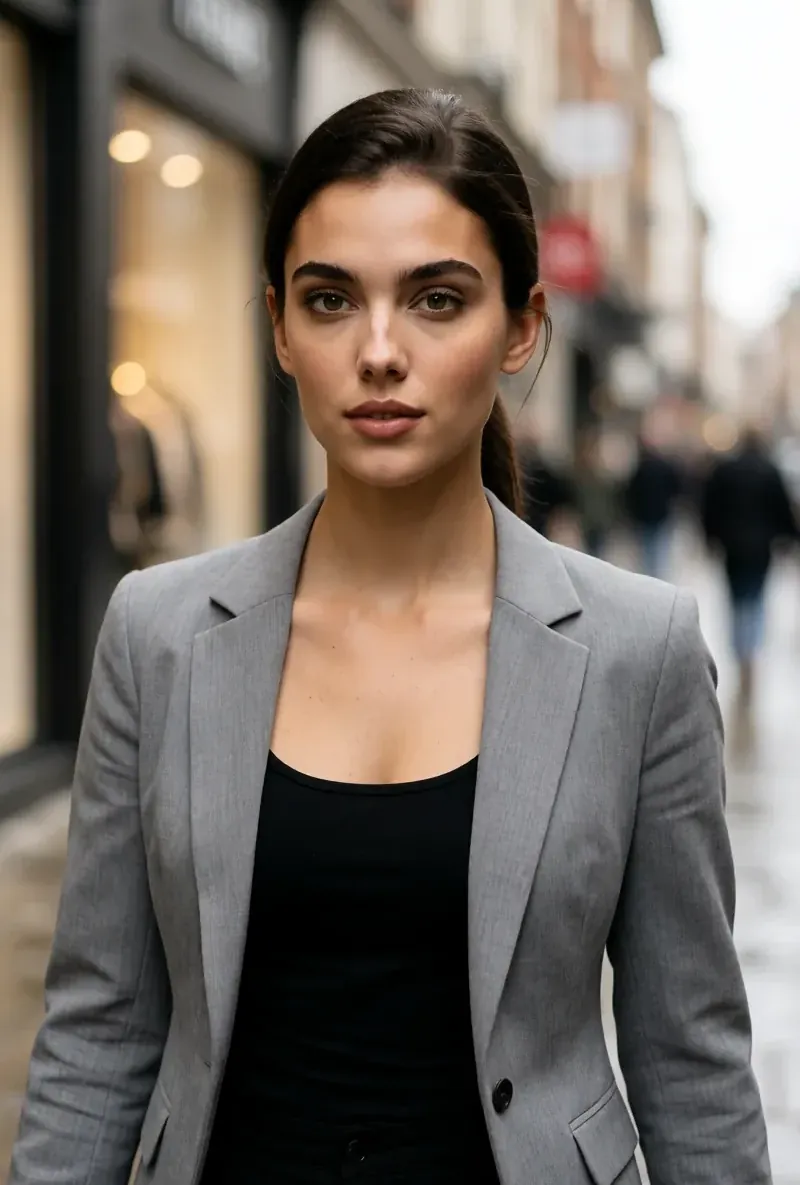
A tool covers production, not income: audience growth and closing deals are still the work. See how to start an AI influencer business for the business side and how much it costs to create an AI influencer for the budget side. Current RYLA plans are on the pricing page.
Spend Your Time on the Audience, Not the Photo Shoot
Design an AI character with a locked face and generate its photos and videos in one workspace. Free to start.
Start Free TrialCommon Mistakes
How AI creator income estimates go wrong
Comparing a salary with a rate card. A job board average describes employees. It is not a forecast for an independent account, and the reverse is also true.
Treating a rate as income. A per-post rate only becomes income when a brand pays it. Most accounts publish far more unpaid posts than paid ones.
Trusting untraceable screenshots. Many monthly income claims for AI accounts online have no named source. Prefer figures with a publisher, a date and a named account.
Counting platform payouts before qualifying. Partner programs have thresholds, and Shorts revenue is a share of a pool, so it should not be budgeted as a fixed amount.
Ignoring costs. Tools, time and any paid promotion come off the top. See are AI influencers profitable for the margin side.
Sources
All sources retrieved 2026-10-03
- AI Content Creator Salary, ZipRecruiter (data as of September 2026)
- Influencer Rates 2026: What to Pay and Charge by Platform and Tier, Stan (updated August 13, 2026)
- The creator economy could approach half-a-trillion dollars by 2027, Goldman Sachs (2023)
- YouTube Partner Program overview and eligibility, YouTube Help
- YouTube Shorts monetization policies, YouTube Help
- Meet the first Spanish AI model earning up to 10,000 euros per month, Euronews (December 27, 2024)